How to Choose the Right Diamond Wire for Your Quarry Project
Introduction
In the stone quarrying industry, selecting the right diamond wire is one of the most critical decisions for achieving efficient, safe, and cost-effective cutting.
The wrong wire can lead to premature breakage, uneven cutting, or excessive costs - while the right one can boost productivity by more than 30%.
This article explains how to choose the most suitable diamond wire for your granite, marble, or sandstone quarry project, covering bead type, wire structure, diameter, and working conditions.
1. Understanding What a Diamond Wire Is
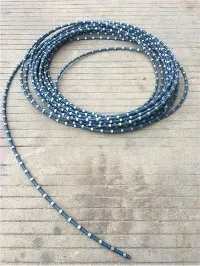
A diamond wire is a flexible steel cable embedded with diamond beads - the key abrasive elements that perform the cutting.
These beads are spaced evenly along the wire and are bonded using sintering, electroplating, or vacuum brazing.
A typical quarry wire consists of:
Steel core – high tensile strength cable
Diamond beads – 6–11 mm diameter
Spacer and rubber coating – for vibration absorption and water protection
The combination of these components determines cutting performance, lifespan, and cost-efficiency.
2. Step 1: Identify the Material You Are Cutting
The first step is to match your wire with the stone type and hardness.
Different materials require different bead formulas and bond strengths.
| Stone Type | Recommended Bead Type | Bond Strength | Typical Wire Speed |
|---|---|---|---|
| Granite / Basalt | Sintered Beads | High | 25–35 m/s |
| Marble / Limestone | Electroplated Beads | Medium | 30–40 m/s |
| Sandstone / Soft Rock | Vacuum Brazed or Electroplated | Low–Medium | 35–45 m/s |
| Reinforced Concrete | Sintered or Vacuum Brazed | High | 20–30 m/s |
Pro Tip:
If you are cutting a mixed quarry (e.g., marble + quartz veins), choose a hybrid bead type for consistent wear.
(Image ALT: diamond wire selection by stone type chart)
3. Step 2: Choose the Correct Wire Diameter
Wire diameter directly affects cutting precision, stability, and durability.
| Diameter (mm) | Typical Use | Cutting Speed | Wire Strength |
|---|---|---|---|
| 6.3–7.3 mm | Laboratory or thin slab cutting | Very high | Low |
| 8.0–8.8 mm | Standard marble / limestone | High | Medium |
| 10.0–11.5 mm | Granite and hard stone quarrying | Moderate | High |
Guideline:
Use smaller diameter wires for fine cutting and high-speed operations.
Use larger wires for massive block extraction or when stability is more important than speed.
4. Step 3: Select the Right Bead Bond Type
The bead bond type defines how the diamond particles are held in place and how they wear during cutting.
(1) Sintered Beads
Manufactured by hot-pressing metal powders and diamonds together.
Best for granite and hard materials.
Long lifespan, excellent heat resistance.
(Image ALT: sintered diamond beads for granite cutting)
(2) Electroplated Beads
Diamonds are plated onto a steel shell using nickel coating.
Sharp cutting but shorter life.
Best for marble and limestone, where lower hardness allows faster cutting.
(Image ALT: electroplated diamond beads for marble)
(3) Vacuum Brazed Beads
Diamonds are brazed directly to the surface, providing very strong bonding.
Best for reinforced concrete or mixed materials.
5. Step 4: Consider the Quarry Environment
Cutting performance depends heavily on your working environment and equipment conditions:
| Factor | Impact | Recommendation |
|---|---|---|
| Temperature | High temp reduces bead life | Use heat-resistant rubber coating |
| Water Supply | Poor cooling increases wear | Maintain stable water flow (15–30 L/min) |
| Machine Power | Low power limits cutting speed | Match wire to machine kW rating |
| Block Size | Large blocks need more stable wire | Choose thicker diameter (10–11 mm) |
| Dust & Slurry | Poor drainage clogs beads | Use proper slurry removal system |
6. Step 5: Evaluate Wire Brand and Quality
Not all diamond wires are created equal.
Choose reputable manufacturers who provide consistent bead spacing, high-quality steel core, and advanced sintering control.
ToolWits Diamond Wire Advantages:
Uniform diamond distribution for consistent cutting
Optimized bead spacing for smoother operation
Premium European steel wire core
Advanced vulcanized rubber for high heat and water resistance
Custom design available for granite, marble, and concrete applications
7. Step 6: Test and Adjust for Optimal Performance
Before full-scale production:
Test the wire on a small block to evaluate speed and wear rate.
Adjust tension (250–350 kg) and wire speed based on stone hardness.
Track wire performance in your logbook - note cutting time, cooling water use, and bead wear.
Replace wire before reaching the final wear limit to avoid breakage.
FAQ
Q1: Can I use the same diamond wire for both marble and granite?
A: It's possible, but not ideal. Granite requires harder, sintered beads, while marble needs electroplated ones for faster cutting and less vibration.
Q2: How long does a diamond wire last in quarrying?
A: Depending on material and conditions, typical life ranges from 30–60 square meters per wire, or around 40–100 hours of active cutting.
Q3: Does wire diameter affect cutting precision?
A: Yes. Smaller wires cut faster and cleaner but wear faster; thicker wires are more durable and stable for large blocks.
Choosing the right diamond wire for your quarry project is not just about price - it's about matching the wire type, bead formula, and equipment setup to your material and environment.
The right choice can dramatically improve productivity, reduce waste, and extend tool life.
At ToolWits, we offer custom-engineered diamond wires for granite, marble, sandstone, and reinforced concrete.
Each wire is designed for optimal speed, durability, and cutting precision - tested in real quarry environments worldwide.
📩
to get a professional consultation for your quarry cutting project.