


Top 5 Common Problems with Diamond Wire Saw Machines and How to Solve Them
Introduction
A diamond wire saw is one of the most efficient and versatile tools for cutting hard materials like granite, marble, and reinforced concrete.
However, even the best machines can encounter performance issues during continuous operation.
For quarry owners and stone processors, understanding the common problems and their root causes is essential to ensure safety, efficiency, and cost-effectiveness.
In this article, we summarize the five most frequent problems in diamond wire saw operations - along with practical solutions and maintenance advice from ToolWits engineers.
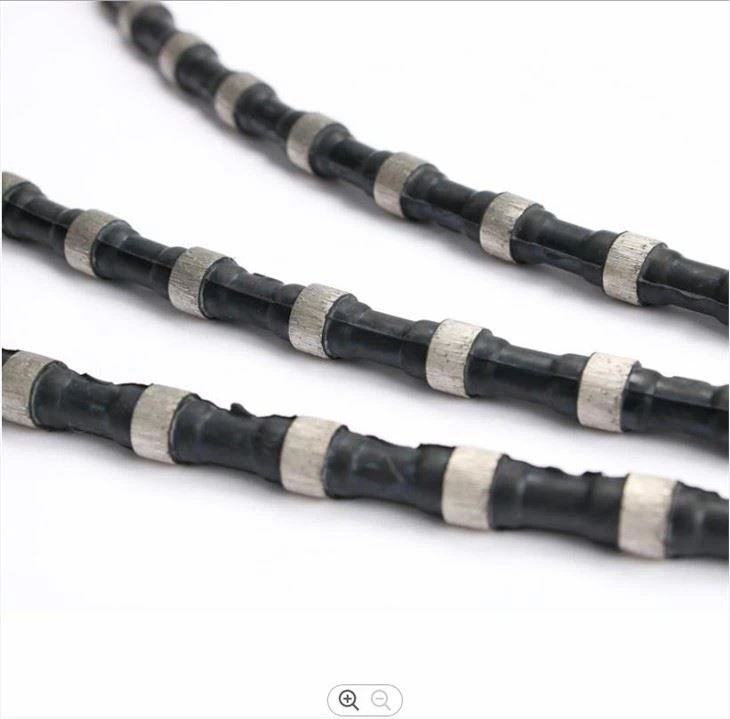
1. Problem: Wire Breakage During Cutting
Symptoms:
The diamond wire snaps suddenly during operation.
Wire beads scatter or detach.
The cutting line becomes unstable.
Causes:
Excessive wire tension or uneven stress on pulleys.
Worn-out guiding wheels or improper alignment.
Wire fatigue due to repeated bending at the same spot.
Poor lubrication or insufficient cooling during long cuts.
Solutions:
Always check wire tension and keep it within manufacturer's recommended range (e.g., 250–350 kg for quarry wire).
Replace worn pulleys and ensure alignment before each operation.
Apply continuous water cooling to reduce heat and friction.
Avoid sharp corner turns; use a proper guiding wheel setup.
Replace the wire when it reaches 80% of its lifespan to prevent breakage during production.
2. Problem: Uneven Bead Wear
Symptoms:
Some beads wear faster than others.
Cutting efficiency drops over time.
The wire starts vibrating or drifting during the cut.
Causes:
Improper wire speed or feed rate.
Hard inclusions in the material (e.g., quartz veins in granite).
Insufficient water cooling leading to overheating.
Wrong selection of bead type for the specific stone.
Solutions:
Adjust wire speed and feed pressure according to stone hardness.
Granite: 25–35 m/s
Marble: 30–40 m/s
Use uniform cooling from both sides of the cut.
Rotate the wire direction periodically (every 10–15 hours).
Choose appropriate beads - sintered beads for hard stone, electroplated for soft materials.
Inspect wire wear regularly and record bead condition for predictive maintenance.
3. Problem: Slow Cutting Speed
Symptoms:
The cutting process takes much longer than normal.
The wire seems to "slide" without effective cutting.
Increased power consumption and heat generation.
Causes:
Dull diamond beads (loss of sharpness).
Insufficient tension or wire slippage on the drive wheel.
Low wire speed or feed pressure.
Material clogging the diamond segments.
Solutions:
Check and re-sharpen dull beads by briefly cutting a soft abrasive stone (e.g., sandstone).
Increase wire tension slightly to improve contact pressure.
Adjust speed:
Too slow → inefficient grinding
Too fast → excessive wear
Maintain proper cooling water flow (15–30 L/min) to wash away debris.
Ensure correct driving wheel friction by cleaning rubber coating or adjusting groove depth.
(Image ALT: diamond wire saw slow cutting troubleshooting guide)
4. Problem: Overheating or Burning of Beads
Symptoms:
Beads turn blue or black due to excessive heat.
Rubber or plastic coating melts or smells burnt.
Wire flexibility decreases, causing vibration.
Causes:
Insufficient cooling water supply.
High cutting pressure or excessive wire speed.
Clogged water nozzles.
Poor-quality beads with low heat resistance.
Solutions:
Ensure stable and adequate water flow throughout the cut.
Clean or replace blocked nozzles regularly.
Reduce cutting speed if overheating persists.
Choose heat-resistant sintered beads for hard and dry-cut conditions.
Check that the tensioning system is functioning properly to avoid friction spikes.
(Image ALT: diamond wire saw bead overheating prevention)
5. Problem: Wire Deviation and Unstable Cutting Line
Symptoms:
The wire moves off track, cutting out of alignment.
Grooves become uneven or inclined.
Increased vibration and poor surface finish.
Causes:
Misalignment of guiding pulleys.
Loose mounting of the material or machine base.
Uneven wear of drive wheel or bearings.
Low wire tension.
Solutions:
Realign all pulleys and bearings before each cutting cycle.
Keep tension constant and monitor it via control system sensors.
Fix the stone block firmly using wedges or clamps.
Check the drive system balance and lubricate bearings periodically.
Calibrate your machine's cutting plane angle once per week for accuracy.
Bonus Tip: Routine Maintenance Checklist
Regular inspection and maintenance can prevent most of the issues above.
Here's a simple daily checklist you can follow:
✅ Check tension and pulley alignment.
✅ Clean all water nozzles and filters.
✅ Inspect bead wear and replace damaged sections.
✅ Ensure wire lubrication and proper coolant flow.
✅ Log operating hours for predictive maintenance scheduling.
FAQ
Q1: What causes a diamond wire to break frequently?
A: Usually due to over-tension, worn pulleys, or poor alignment. Maintaining proper tension and replacing damaged pulleys can prevent this.
Q2: How to tell if diamond beads are worn out?
A: When the wire's cutting speed drops significantly and beads appear smooth or flat instead of sharp.
Q3: Can I reuse a partially worn diamond wire?
A: Yes, you can shorten and rejoin the wire if the beads are still effective, but always check joint safety before operation.
A diamond wire saw is a powerful and efficient cutting tool - but like all precision machinery, it requires regular monitoring and maintenance.
By understanding the common problems such as wire breakage, uneven wear, or overheating, you can minimize downtime, reduce operating costs, and extend equipment life.
At ToolWits, we design and manufacture high-performance diamond wire saws and accessories engineered to withstand the toughest quarry and construction conditions.
💡 Need expert advice or customized wire solutions?
👉
to get professional recommendations for your specific cutting projects.


