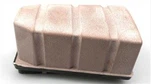
The selection of diamond particle size of diamond polishing stone should first consider the processing requirements. When rough grinding, use coarser particles and use finer particles for fine grinding. Secondly, the type of binder should be considered. Generally, coarser particles are used for the bonding agent with strong diamond bonding, and finer particles are suitable for the bonding agent with poor bonding strength. In addition, the grinding efficiency should also be considered. Under the condition that the processing requirements can be met and the bond strength is sufficient, a coarser-grained diamond can be selected to improve the grinding efficiency. The shape and size of diamond grinding tools depend on factors such as processing method, workpiece shape, processing quality, and type of grinding machine. Abrasive shape and size specifications have been standardized. In order to meet the special needs in actual production, various manufacturers have also developed some non-standard products for users to choose.
Diamond polishing is a popular method of finishing stone surfaces to enhance their beauty and durability. This process uses diamond abrasives to smooth and polish rough or uneven surfaces, resulting in a high-gloss, mirror-like shine.
Diamond polishing also has long-lasting results. Unlike other polishing methods that can wear off or become dull over time, diamond polishing creates a durable and long-lasting finish that can withstand daily wear and tear.
Diamond polishing is a highly effective and versatile method for improving the visual appeal and durability of stone surfaces. It offers precision, control, versatility, and long-lasting results, making it a top choice for homeowners and professionals alike.
Diamond Polishing Stone – Premium Grinding & Polishing Solutions for Stone Surfaces
Diamond polishing stones are abrasive tools designed to refine, smooth, and enhance the finish of natural and engineered stone surfaces such as granite, marble, terrazzo, concrete, quartz, and travertine. By combining high‑grade industrial diamonds with specialized bonding materials, these polishing stones deliver exceptionally fine surface quality, strong wear resistance, and consistent performance - making them indispensable in stone fabrication, flooring installation, renovation, and architectural finishing.
Whether you're aiming for a mirror‑like gloss or a uniform matte finish, diamond polishing stones help achieve professional results quickly and efficiently.
What Is a Diamond Polishing Stone?
A diamond polishing stone is a handheld or machine‑mounted abrasive tool embedded with diamond particles. Unlike traditional abrasive stones, diamond polishing stones use the superior hardness of diamonds to grind down microscopic irregularities, gradually transforming a rough surface into a smooth, refined finish.
Diamond polishing stones are available in multiple grit levels - from coarse grinding to ultra‑fine polishing - to support every stage of the surface finishing process.
How Diamond Polishing Stones Work
Diamond polishing stones operate through controlled abrasion:
Coarse Grit: Removes scratches, ridges, and surface imperfections
Medium Grit: Refines the surface, blending edges and softening scratches
Fine Grit: Prepares for high‑gloss polishing
Ultra‑Fine Grit: Achieves mirror‑like shine or premium matte finish
Each stage uses progressively finer diamond grits to create uniform smoothness and enhanced surface quality.
Key Benefits of Diamond Polishing Stones
✔ High Precision Surface Finish
Diamond abrasives provide even material removal and refined polishing without causing micro‑cracks or surface defects.
✔ Multi‑Stage Polishing Capability
Available in a wide range of grits - from rough grinding to ultra‑fine finishing - supporting multi‑step polishing workflows.
✔ Versatile Material Compatibility
Suitable for polishing granite, marble, engineered stone, concrete, terrazzo, and other hard surfaces.
✔ Long Tool Life
High‑quality diamonds embedded in optimized bonding matrices enhance durability and wear resistance, reducing the frequency of replacements.
✔ Improved Efficiency
Diamond stones grind and polish faster than traditional abrasives, saving labor hours and improving productivity on site or in the shop.
Typical Applications
🪨 Stone Fabrication Shops
Fine‑tune slab edges, surface finishes, and decorative contours on granite, marble, and engineered stone.
🏢 Floor & Wall Polishing
Achieve smooth, uniform finishes on concrete, terrazzo, or natural stone floors and walls during installation or renovation.
🏠 Surface Restoration
Remove stains, etch marks, and old coatings from stone surfaces, preparing them for resealing or finishing.
🚧 Architectural & Decorative Stonework
Detail polishing around columns, staircases, fireplaces, and countertops for premium aesthetic results.
🧰 Hardscape & Outdoor Projects
Polish edges and surfaces of stone pavers, coping stones, and landscape features to match design specifications.

How to Choose the Right Diamond Polishing Stone
When selecting a diamond polishing stone, consider the following factors:
📏 Material Hardness
Harder stones like granite require higher‑grade diamond grits and durable bonding, while softer stones like marble may use softer bond formulas for optimal results.
🧱 Grit Sequence
Start with a coarse grit if the surface is rough, then follow a progressive grit sequence for consistent polishing results.
⚙️ Tool Compatibility
Ensure the polishing stone matches the attachment system (thread, shank, or backing pad) of your grinder, polisher, or CNC machine.
💧 Wet vs Dry Polishing
Wet polishing helps reduce dust, enhance cooling, and extend tool life. Dry stones are useful for on‑site spot work where water management is challenging.
📐 Application Type
Different shapes (flat, conical, cylindrical) support various polishing tasks - choose based on surface geometry and access needs.
Diamond Polishing Stone Shapes & Styles
Flat Stones: Ideal for broad surface polishing
Cup Stones: Great for edges and contours
Cylindrical Stones: Effective in slot or groove polishing
Conical Stones: Best for concave surfaces or rounded edges
Choosing the right shape ensures better contact with the surface and more consistent polishing results.
Diamond Grit Guide
| Grit Level | Typical Use |
|---|---|
| #50–#100 | Initial grinding and scratch removal |
| #200–#400 | Intermediate surface refinement |
| #800–#1500 | Polishing for wall and floor finishing |
| #3000+ | Ultra‑fine polish and high gloss |
A properly sequenced grit progression leads to professional‑grade finishes.
Diamond Polishing Stone vs Traditional Abrasives
Diamond Stones
Long lifespans
Fast material removal
Consistent surface quality
Suitable for hard materials
Traditional Stones
Wear out faster
Limited effectiveness on hard stone
Require more time and passes
Diamond polishing stones outperform traditional abrasives in speed, durability, and finish quality - especially on granite, engineered stone, or abrasive concrete surfaces.
Packing, Storage, Handling and Transportation


After-sales service team

Technical Team

Hot Tags: diamond polishing stone, China diamond polishing stone manufacturers, suppliers, factory, Diamond Pads For Granite, Diamond Stone Polishing Pads, Stone Floor Polishing Pads, Diamond Pads For Granite, Diamond Polishing Discs, Diamond Pad For Floor Buffer