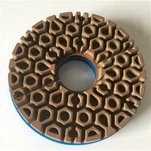
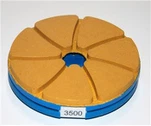
Magnesia Abrasive is used in continuous auto polishing line or semi auto polishing machine for granite, marble and etc medium and fine polishing procedures. It is low cost and finish very fast, need to change again and again in a short time. It is an very old and traditional abrasives. So nowadays, resin abrasives are more and more popular and gradually take replace of it.
Magnesia Abrasive is very heavy, so the transportation cost is very high compare with its value and not economical for long distance transporting. And it is produced by chemical raw materials, after polished the stone slab with water, the chemical is mix with the waste water poluted, so the water should make some treatment and recycle, otherwise, if it pour out to the river or field, the enviroment will be poluted. So it is a tool not so popular now.


Note
The above specification is only for reference, other or special specification can be ordered by customer.
Magnesia Abrasive – Premium Stone Polishing & Grinding Solution
Magnesia abrasive (also called magnesite abrasive) is a traditional high-performance polishing and grinding material widely used in the marble, granite, and natural stone industry. Made primarily from magnesium oxide (MgO) and combined with abrasive grains like silicon carbide or aluminum oxide, magnesia abrasive provides efficient stock removal, surface leveling, and preparation for final polishing.
These abrasives are popular in stone processing factories, restoration workshops, and fabrication facilities, offering a cost-effective, durable, and environmentally friendly alternative for preliminary polishing and finishing stages.
What Is Magnesia Abrasive?
Magnesia abrasive is a bonded abrasive tool, typically available in:
Frankfurt stones (abrasive blocks)
Abrasive sticks / Fickerts
Polishing pads or segments
The magnesia binder holds the abrasive grains firmly, allowing controlled wear and consistent performance. This ensures even surface texture, making it ideal for pre-polishing and intermediate grinding before the application of diamond polishing tools.
Unlike diamond abrasives, magnesia abrasives are economical, easy to use, and suitable for both manual and machine-assisted stone finishing.
Key Features of Magnesia Abrasive
💎 Efficient Grinding Performance
Removes surface imperfections, scratches, and unevenness efficiently
Ideal for rough and medium stone preparation
💰 Cost-Effective Solution
Lower unit cost compared to diamond abrasives
Provides excellent performance for pre-polishing and surface smoothing
⚙️ Wide Grit Range
Available in coarse, medium, and fine grits
Supports progressive polishing workflows from rough stock removal to pre-polish
🧱 Surface Consistency
Produces uniform finishes, preparing marble and granite for final polishing
Reduces patchiness and uneven gloss in subsequent polishing stages
🔄 Durable & Versatile
Works effectively on both hard stones (granite) and soft stones (marble, limestone)
Compatible with automatic, semi-automatic, and manual polishing systems
Applications of Magnesia Abrasive
Magnesia abrasive tools are widely used for:
🏢 Marble Floor Restoration – Smooths worn floors before high-gloss polishing
🪨 Granite Surface Preparation – Prepares blocks for diamond polishing
🧱 Natural Stone Finishing – Achieves uniform texture before polishing or coating
🏗 Industrial Polishing Lines – Compatible with automatic and semi-automatic polishing machines
🏛 Heritage Stone Maintenance – Ideal for restoration of historic stone surfaces
Forms of Magnesia Abrasive
🔹 Frankfurt Abrasive Stones
Used for large area grinding and calibration
Suitable for machine polishing lines
🔹 Magnesite Fickerts (Abrasive Sticks)
Rod-shaped for medium grinding and localized surface correction
Adaptable for both automatic and manual polishing
🔹 Abrasive Pads & Segments
For custom surface finishing
Used in conjunction with backer plates and polishing machines
How Magnesia Abrasives Fit Into the Stone Polishing Process
Rough Grinding: Coarse magnesia abrasives remove irregularities and flatten surfaces
Intermediate Polishing: Medium grits refine the surface for a smoother texture
Pre-Polishing: Fine magnesia grits prepare the stone for diamond polishing
Final Polishing: Diamond tools provide high-gloss, mirror finishes
This stepwise workflow ensures maximum efficiency, reduced material waste, and high-quality stone surfaces.
Advantages of Magnesia Abrasives
Economical compared to diamond abrasives
Provides uniform surface preparation for high-quality finishing
Compatible with various stone types: marble, granite, limestone, and engineered stone
Reduces wear on diamond tools by preparing surfaces effectively
Eco-friendly and easy to use in wet or dry polishing processes
Magnesia Abrasive vs Diamond Tools
| Feature | Magnesia Abrasive | Diamond Abrasive |
|---|---|---|
| Cost | Lower | Higher |
| Grinding Speed | Moderate | Very High |
| Best Use | Pre-polishing & intermediate grinding | Final polishing & hard stones |
| Lifespan | Medium | Long |
| Surface Finish | Good | Excellent |
Magnesia abrasives are typically used before diamond polishing, preparing surfaces efficiently and reducing stress on diamond tools.
How to Choose the Right Magnesia Abrasive
Grit Size: Coarse for stock removal, fine for pre-polish
Stone Type: Match hardness of stone (marble vs granite vs limestone)
Machine Compatibility: Ensure fit for automatic, semi-automatic, or manual polishing
Bond Type: Standard magnesia or hybrid bond depending on polishing requirements
Magnesia Abrasive Application
Magnesia Abrasive Machine

Packing, Storage, Handling and Transportation
Magnesia Abrasive if small quantity pack in paper box, if large quantity, they are packed in polywood case before delivery.


After sales service team

Technical Team

Hot Tags: magnesia abrasive, China magnesia abrasive manufacturers, suppliers, factory, Stone Floor Polishing Pads, Diamond Grinding Pads, Diamond Floor Pads, Granite Polishing Brush, Diamond Resin Polishing Pads, Dry Stone Polishing Pads