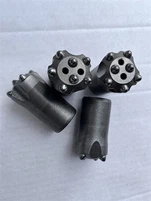
The rotary rock drill is a highly effective machine that has revolutionized the quarrying industry. Its ability to easily drill through rocks and stones has made it an indispensable tool for quarry workers around the world.
One of the major benefits of this machine is its convenience. Compared to traditional drilling methods, the rotary rock drill requires less manpower and can complete the drilling process faster and more efficiently. As a result, quarry production rates have increased significantly, saving time and money for quarry owners.
Moreover, the rotary rock drill is highly reliable and durable, making it an excellent long-term investment for quarry operators. It can withstand harsh working conditions and has a low maintenance requirement, making it a cost-effective option in the long run.
Another positive aspect of this machine is its contribution to environmental sustainability. The use of the rotary rock drill reduces the amount of air and noise pollution that is generated during the drilling process. This means that it not only benefits the workers, but also the surrounding community.
Overall, the rotary rock drill is an excellent machine that has transformed the quarrying industry. Its convenience, reliability, and sustainability benefits make it a highly valuable asset for all those involved in quarrying operations.
Rotary Rock Drill – Industrial Drilling Solutions for Hard Stone & Quarry Operations
A rotary rock drill is a powerful drilling machine designed to bore holes into dense rock, hard stone, and compact geological formations with high efficiency and precision. Unlike impact‑only drilling tools, rotary rock drills use continuous rotational force, enabling smooth penetration in stable or fractured rock conditions. These drills are widely used in stone quarries, mining sites, civil construction, foundation work, and tunneling projects where reliable, deep hole drilling is essential.
What Is a Rotary Rock Drill?
A rotary rock drill combines a rotation mechanism with steady thrust pressure to grind and cut rock surfaces using specialized drill bits. By rotating the bit at high speeds while applying controlled downward force, these drills are able to break up hard materials, creating holes for anchors, blasting patterns, anchors, bolts, bolts, or rock removal.
This drilling method delivers consistent performance across varying material hardness levels - from soft sedimentary rocks to high‑strength igneous formations like granite and basalt.
Core Features & Technical Advantages
Stable Continuous Rotational Cutting
Rotary rock drills provide consistent turning action, which distributes cutting force evenly across the bit face, reducing excessive wear and minimizing tool breakage.
High Penetration & Drilling Efficiency
By combining rotation and downward feed, rotary drills can achieve higher penetration rates compared to non‑rotary or simple percussive drills when drilling in uniform or massive rock masses.
Versatile Material Compatibility
These drills handle a wide range of geological materials, including:
Hard rocks (granite, basalt)
Medium rocks (limestone, sandstone)
Masonry and reinforced concrete
Weathered rock and mixed geological strata
Adaptable Hole Configurations
Rotary rock drills can be set up for:
Straight holes
Angled drilling
Deep vertical drilling
Multi‑hole patterns for blasting, anchors, or utilities
This flexibility allows them to be used in both production drilling and preparatory construction tasks.
Rugged Construction
Engineered for heavy industrial environments, rotary rock drills are constructed with:
High‑strength steel casing
Durable bearings and spindle systems
Sealed components for dust and moisture resistance
Reinforced gear trains for robust torque delivery
These design features ensure long service life and reduced downtime even in abrasive working conditions.
Applications of Rotary Rock Drills
Rotary rock drilling equipment is widely used in multiple industries, including:
🪨 Stone Quarrying
Drilling holes for:
Block splitting patterns
Anchor holes
Wire saw guide holes
Ventilation and drainage holes
🏗 Civil Construction
Used for:
Foundation support hole drilling
Anchor bolt holes
Structural reinforcement preparation
Bridge abutment drilling
⛏ Mining & Exploration
Ideal for:
Core drilling in soft to medium rock
Sampling hole creation
Pre‑blast holes in mining benches
🛠 Tunneling & Underground Works
Computes:
Ventilation holes
Rock face profiling
Support anchor installation
🧱 Supplemental Structural Drilling
Drilling through reinforced concrete, overburden layers, or mixed rock‑soil materials where rotary penetration is advantageous.
Drill Bits for Rotary Rock Drilling
Rotary rock drills work with a variety of drill bits depending on application and rock type:
Carbide button bits - Robust and durable for hard rock drilling
Cross bits - Effective for fractured or layered rock
Chisel bits - Suitable for less abrasive or softer rocks
Tri‑cone bits (for larger rigs) - Used in deep drilling or borehole preparation
Selecting the right bit type significantly improves penetration speed, hole quality, and bit longevity.
Operational Best Practices
To maximize productivity and tool life:
✔ Choose the correct drill bit based on rock hardness and structure
✔ Maintain steady rotational speed and feed pressure
✔ Use flushing air or water to clear cuttings and reduce bit wear
✔ Inspect bits and spindles regularly to avoid premature failure
✔ Adjust drilling parameters based on geological conditions
Effective drilling strategy enhances accuracy, reduces rework, and lowers operating cost.
ROI & Practical Benefits
Using a rotary rock drill offers measurable advantages:
Higher drilling rates in uniform rock conditions
Lower tool degradation due to balanced cutting forces
Improved hole accuracy for anchors, blasting, and utilities
Reduced equipment vibration, benefiting operator comfort
Versatile operation across quarry, construction, and mining environments
These benefits translate to higher productivity, lower downtime, and cost‑efficient drilling operations.
Technical Specifications (Reference)
| Feature | Typical Parameters |
|---|---|
| Drilling Diameter | 25 mm to 150+ mm (varies by model) |
| Rotation Speed | Adjustable based on rock type |
| Power Source | Pneumatic / Hydraulic / Electric |
| Chuck System | Threaded / Welded / Quick‑change |
| Operating Modes | Continuous rotary / Rotate‑stop |
| Cooling Requirements | Air or water flushing |
Exact specifications will depend on the model, power configuration, and drilling system used.
Why Choose a Rotary Rock Drill?
Efficient drilling in hard or medium rock
Consistent penetration with controlled feed
Reduced bit wear and fewer tool changes
Suitable for both quarry and construction sites
Flexible drill orientation and hole planning
Long service life with rugged build quality
Our Teams


Packing and Delivery

Rotary Rock Drill

Rotary Rock Drill Packed for Delivery

Rotary Rock Drill Packing
Hot Tags: rotary rock drill, China rotary rock drill manufacturers, suppliers, factory, Best Bit For Drilling Rock, Rock Drill Accessories, Capstone Water Bag, Air Bag For Quarry, Capstone Air Bag, Cross Bit For Rock Driller